


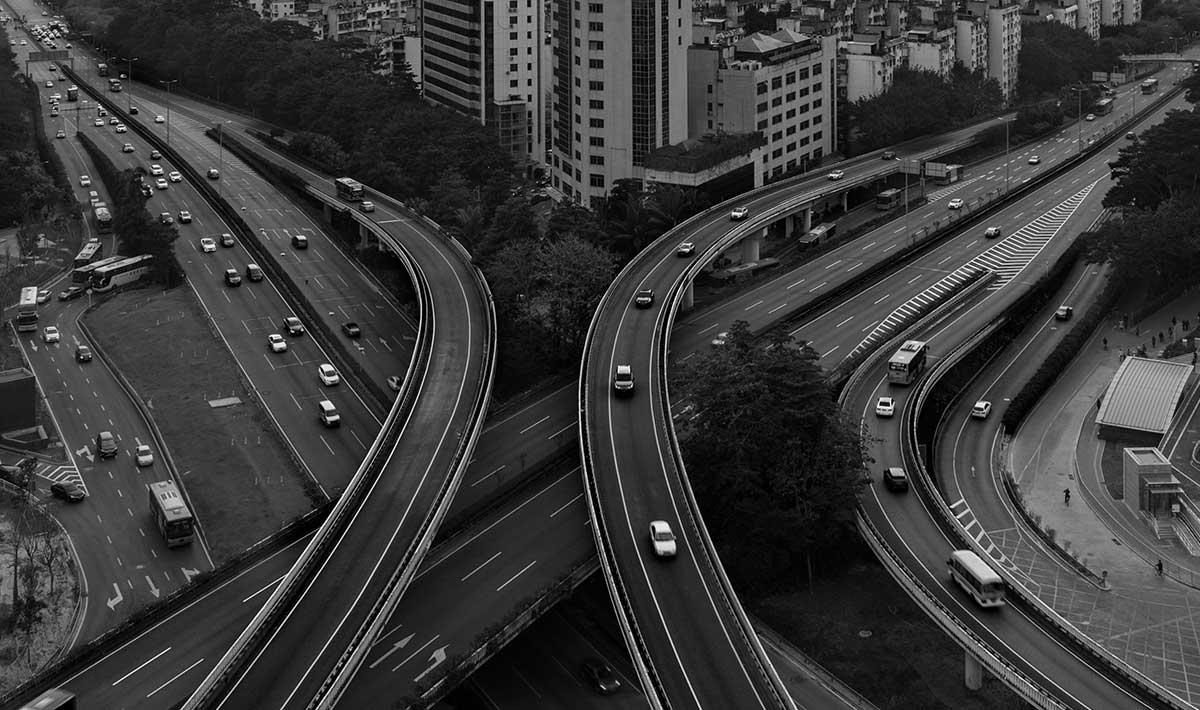
If infrastructure is destiny, India is busy rewriting its fate in asphalt and aggregate. At the PHD Chamber’s 120th Annual Session on October 9th, Nitin Gadkari, the Union minister who relishes a hard target, sketched an agenda as sweeping as the plains his highways traverse: 25 greenfield expressways spanning 10,000km for ₹6 lakh crore; an all-weather tunnel to Ladakh three-quarters complete; and a plan to push logistics costs into the coveted single digits by December 2025. The numbers are large; the direction, larger still.
Consider first the arteries. Greenfield expressways are not mere vanity projects; they are the geometry of growth. Built for speed, grade-separated and access-controlled, they stitch markets together and shorten supply chains. India’s programme—25 new corridors totalling 10,000km—has two virtues: scale, and a bias for network effects (it connects production clusters to ports and consumption centres). The ministry’s confidence in monetising completed assets for as much as ₹15 lakh crore suggests the state intends to recycle capital, not just spend it. That is precisely how first-generation assets pay for the second.
The Himalayas are getting their own proof point. The Zojila Tunnel—long the military and meteorological Achilles’ heel linking Kashmir and Ladakh—is reportedly 75–80% complete. When finished, it will turn a seasonal lifeline into an all-weather conduit, de-risking supply to a strategic frontier and normalising the economics of a remote region. Infrastructure that lowers geopolitical fragility, not only logistics bills, deserves a premium.
Cheaper logistics is where the reform meets the balance sheet. India’s logistics costs have often hovered in the low-to-mid teens as a share of GDP, a competitiveness tax that firms ultimately pass to consumers. Mr Gadkari now claims a fall from 16% to about 10%, with 9% in sight by December 2025—levels that would put India within striking distance of best-in-class emerging peers and, on some measures, below America and much of Europe. Even if one discounts ministerial exuberance, the trend is unmistakable: more lane-kilometres, better interchanges, denser warehousing and improved tech (FASTag, GPS tolling, digital freight matching) are working. For a country where one percentage point off logistics costs can ripple through export pricing, margins and inflation, that is macroeconomics by mixer truck.
There is also a quiet revolution in how India builds. The push for precast “road factories”, ultra-high-performance concrete, recycled waste and even bamboo safety barriers marks a shift from quantity to quality. Such methods accelerate construction, extend lifecycle performance and green the supply chain. If India can institutionalise these practices—standard designs, QA discipline, outcome-based contracts—it will not just build faster; it will build better, and more sustainably.
All this hardscape feeds into a soft, but no less strategic, ambition: the car industry. Mr Gadkari has set a five-year horizon for India to become the world’s largest automobile market. Today the sector is already the third-largest, by his reckoning, having grown in value from roughly ₹14 lakh crore in 2014 to ₹22 lakh crore. On this trajectory, capacity in EVs, buses and flexible-fuel vehicles could do for mobility what smartphones did for electronics—turn India into both a scale market and a supply base. None of this is preordained, but with logistics costs falling, domestic demand resilient and export logistics unclogging, the platform looks sturdier than cynics admit.
Energy security ties the loop between highways and horsepower. India spends an eye-watering ₹22 lakh crore a year on fossil fuels. The minister’s pitch is to trim that bill by nudging transport towards electricity and biofuels. Ethanol is the bridge technology—home-grown, quick to blend, farmer-friendly. By Mr Gadkari’s count, allowing ethanol from maize lifted prices and put an extra ₹45,000 crore into farm households—evidence that decarbonisation can be developmental, not just doctrinal. The more the state aligns crop policy, engine standards and fuel distribution, the faster that dividend compounds.
To be sure, risks abound. Land acquisition is still a thicket; state capacity varies; and construction quality can sag when targets outrun supervision. Monetisation requires stable cash flows and investor trust; if toll elasticity is misread, valuations will suffer. And pushing logistics to 9% is not only about highways—it demands rail-road-port integration, urban freight rationalisation and digital plumbing across thousands of SMEs. But India has crossed a psychological threshold: infrastructure policy is now framed in productivity terms, not ribbon counts. That changes how projects are chosen, sequenced and financed.
The optimistic reading, then, is not naïveté; it is arithmetic. Add 10,000km of high-quality corridors to a maturing asset-recycling model; subtract a few percentage points from logistics costs; multiply by a car industry scaling new price-performance curves; and divide by a fossil-fuel import bill that policy can shave over time. The quotient is an economy that moves goods, people and ideas faster—and does so cleaner and cheaper. Mr Gadkari’s promise is bold. If India sustains the discipline to deliver, the prize will be bigger still: a supply-chain-competitive India that exports not just services but also stuff, at scale. That is the kind of optimism even a hard-nosed economist can endorse.